8.4
Score
From Bad First Impression to Favorite
Shadow of War - Review
By lyndonguitar
Published on September 18, 2025 review
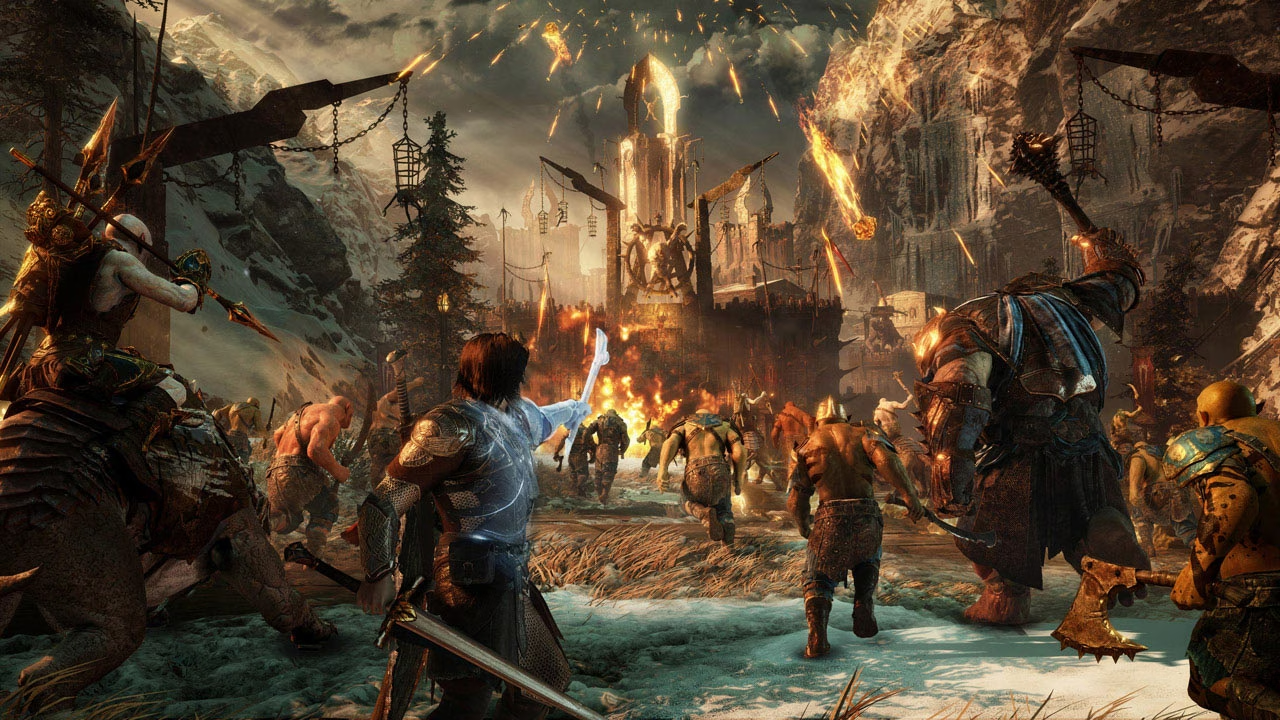
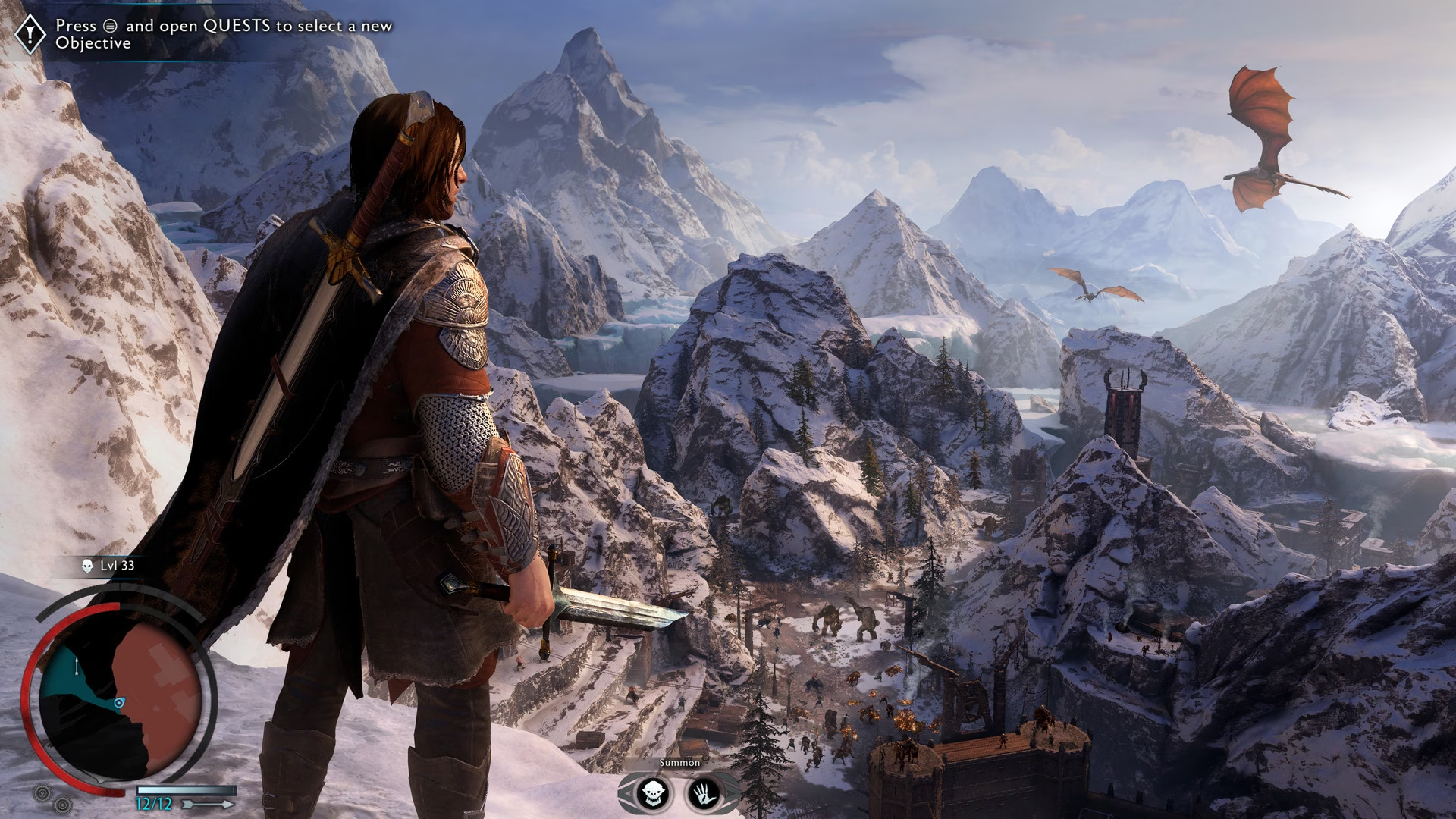
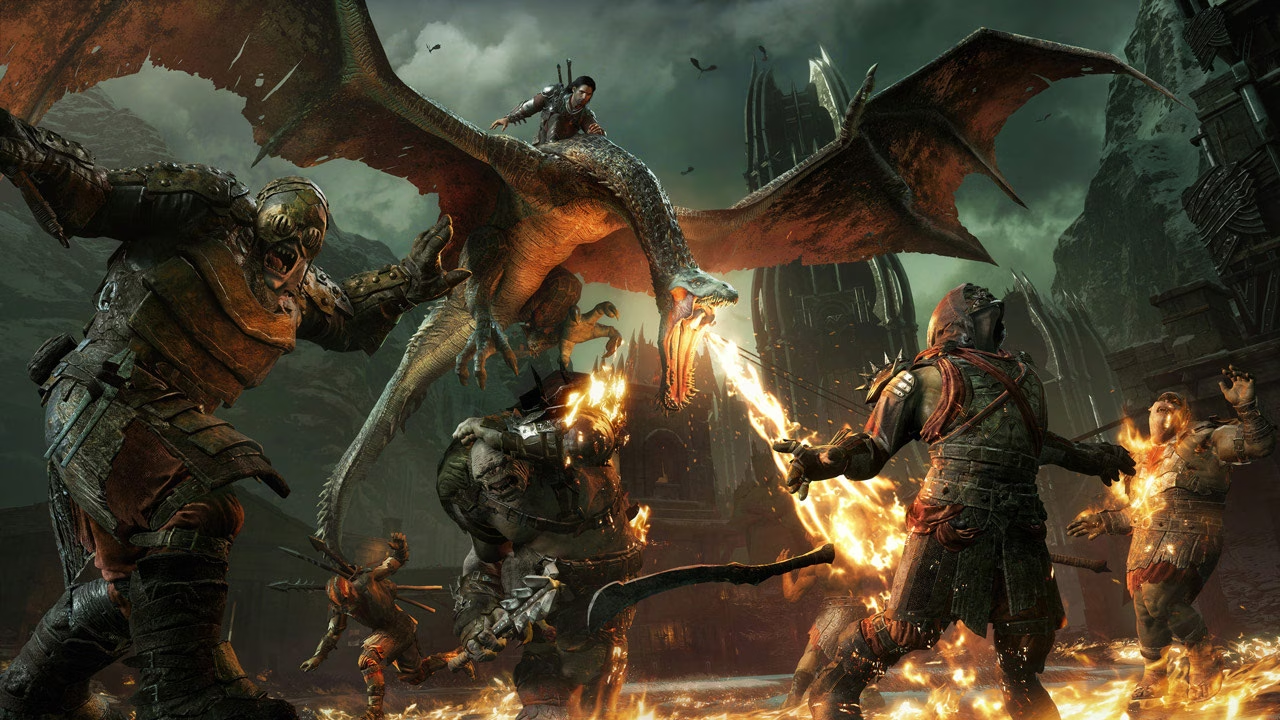
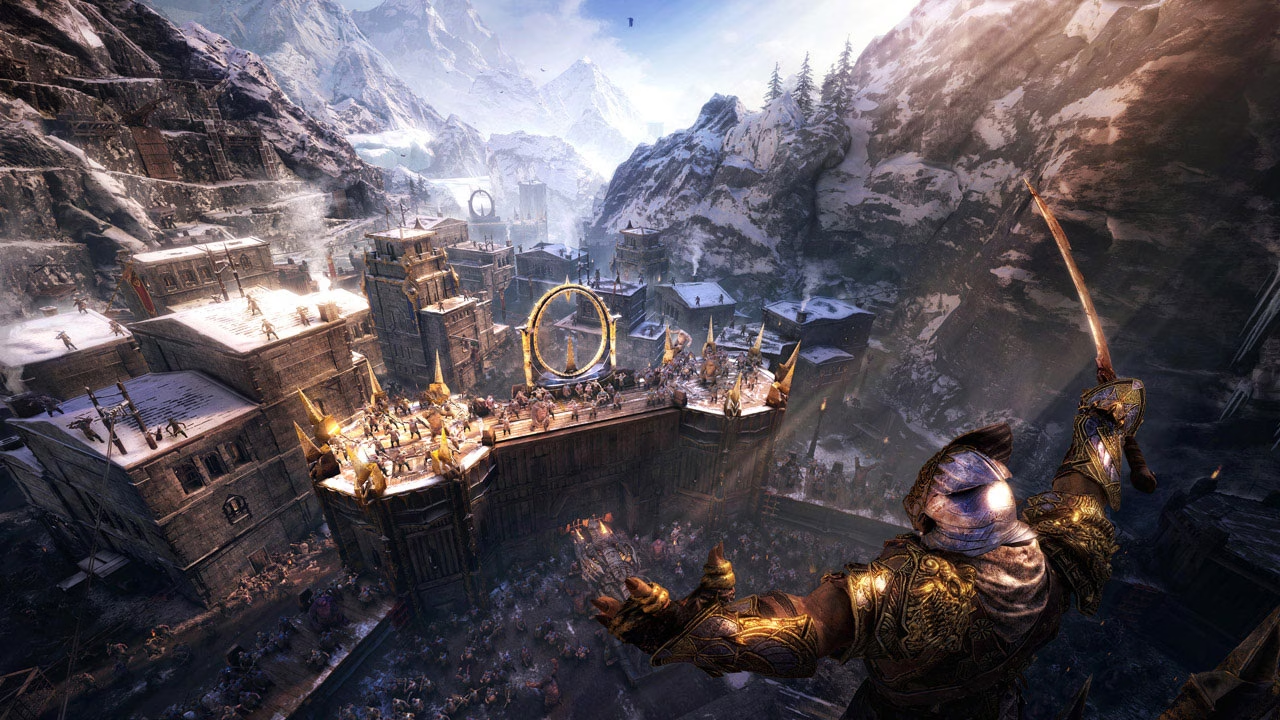
I was a huge fan of the first game, Shadow of Mordor. So when Shadow of War was announced, promising a bigger scale of the same formula - a third-person action-adventure RPG that felt like a hybrid of the Batman Arkham and Assassin’s Creed series - I was immediately excited. What could possibly go wrong?
⚔️ The Nemesis, Follower, and Fortress systems all deliver a highly addictive, dynamic cycle of personalized conquest and betrayal. A much expanded system from the first game.
📜 The story takes a bold, compelling “What If” approach to Lord of the Rings lore, which ultimately works brilliantly as a fresh take.
💥 The combat system remains a satisfying free-flow experience, allowing you to fluidly chain attacks, counters, and diverse abilities.
💍 The addictive gear system constantly rewards you for completing specific challenges to unlock each item’s legendary power.
🗺️ Side quests are so well-designed and integrated that their storytelling matches the quality of the main campaign.
📱 The graphics still hold up exceptionally well, and the game is a fantastic fit for the Steam Deck, running great on the go.
🐌 The first few hours can be slow, and could act as a significant barrier, as the game takes too long to ramp up and hook the player.
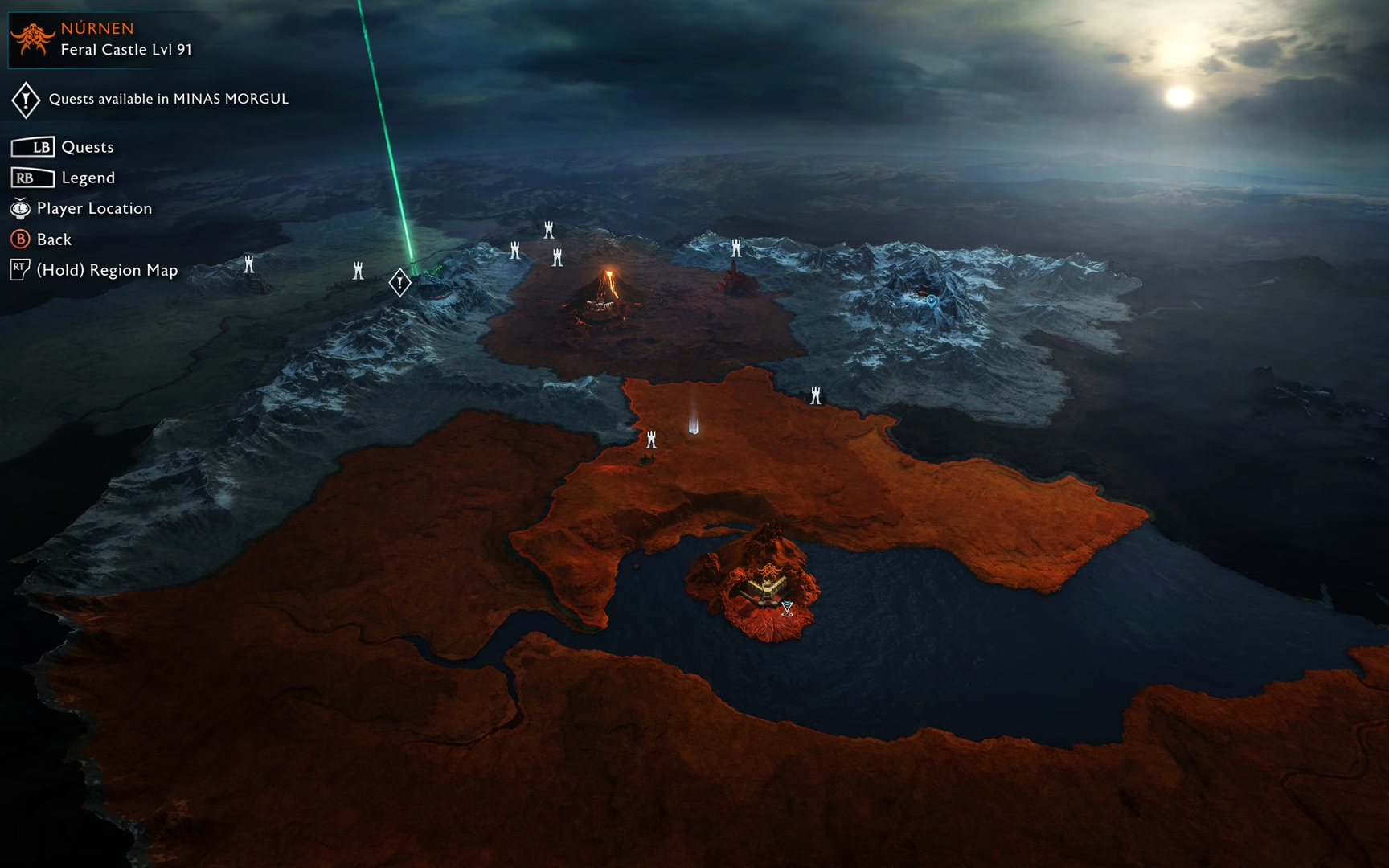
🔗 The larger scale and multiple maps results in a less tight experience where the different regions can feel disjointed and not connected to each other especially with regards to the Nemesis system.
Well, as it turned out, the launch was botched by the inclusion of a pay-to-win system and excessive, grindy elements. I was so put off that I totally lost all the hype and ignore the game on release. Being the patient gamer that I am, I was able to finally try the game in 2021, the microtransactions were gone, but something about the early hours still didn’t click for me. i didnt get hooked in enough to play past the the first area. Maybe it was because the cool abilities from the end of the first game were gone because the main character got nerfed in the story (understandably), or maybe the massive scale felt overwhelming. Whatever the reason, the game just didn’t hook me. I dropped it, refunded it, and for years, I was content to believe I’d never play it again.
That all changed this year when I got a free key of the game thanks to a friends Humble Monthly sub. I activated the game and decided to relegate the game as a Steam Deck “exclusive” to play on the go. And wow, it’s absolutely perfect for the handheld. The performance is fantastic, especially with lossless scaling, and playing it on the OLED screen is a phenomenal experience. I had to power through the same initial two-to-three-hour slog that killed my first attempt, but once I did, everything finally clicked. What started as just supposed to be occasional game I’d play on breaks quickly became a staple, and I ended up beating it in just a few days.
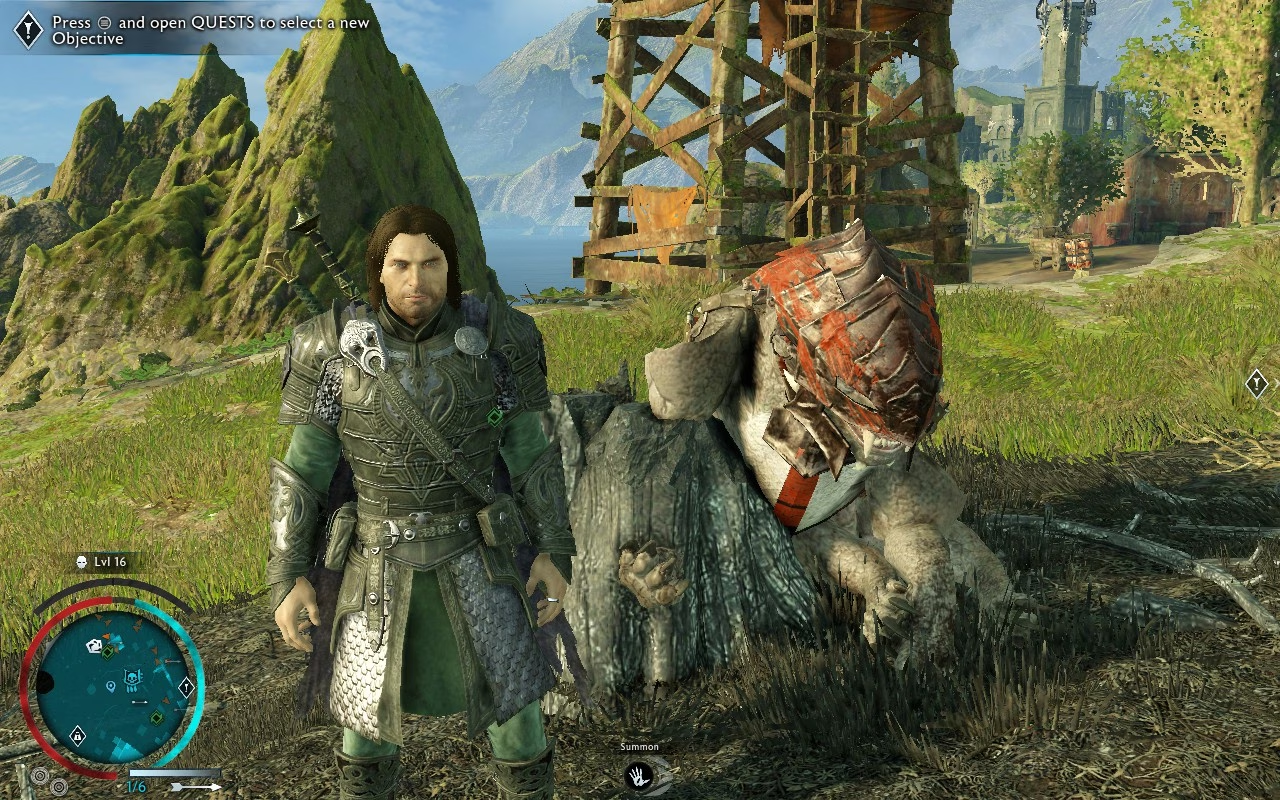
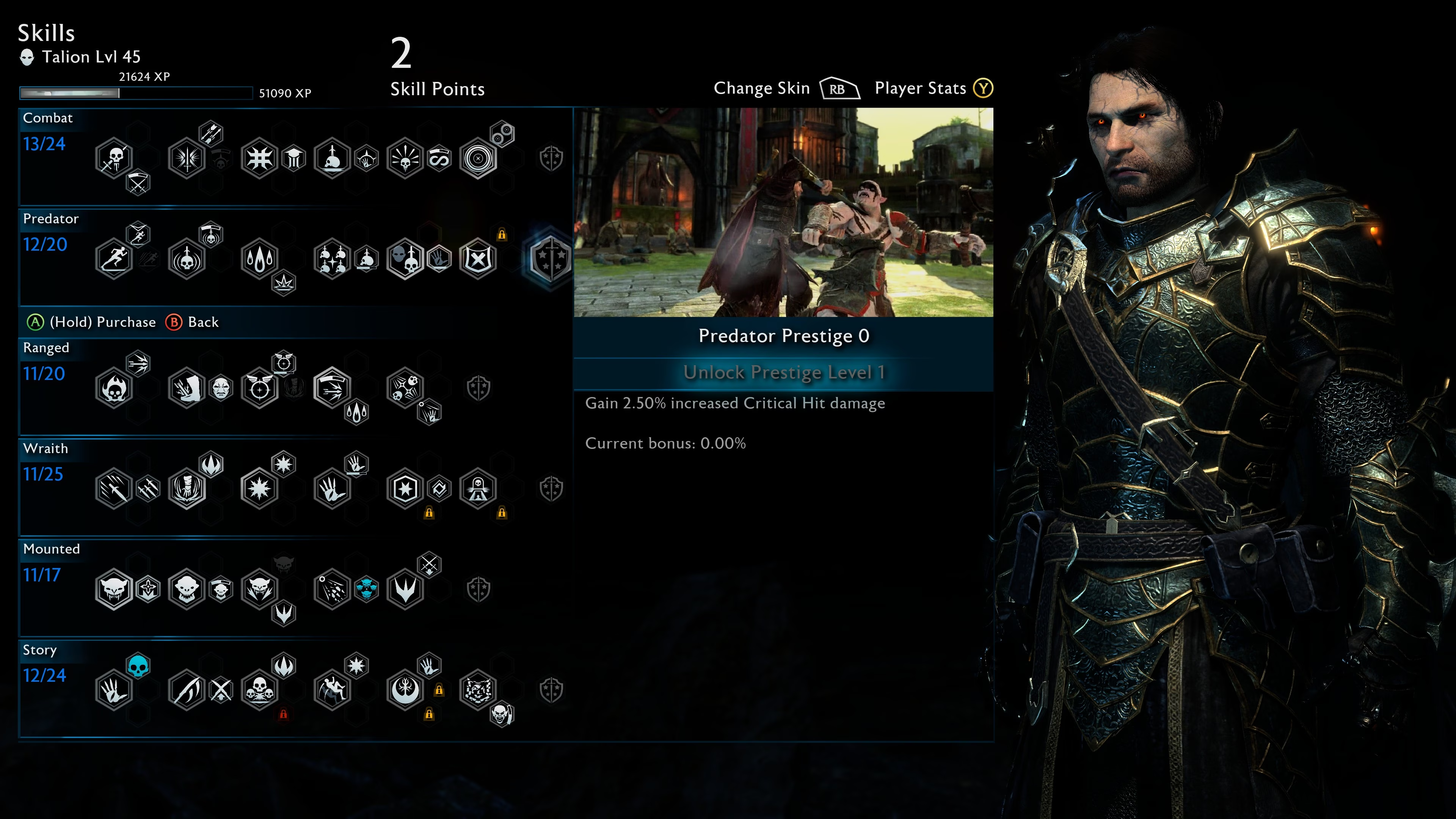
That slow start is, without a doubt, the worst part of the game. However, once you push through it, the rest of the experience is incredibly rewarding. The game’s narrative finds its footing, the RPG progression becomes compelling, and the famously patented Nemesis and Follower systems become incredibly addictive. The combat remains the same satisfying free-flow style of its predecessor, allowing you to fluidly take on multiple enemies at once with a satisfying mix of attacks, counters, and a plethora of moves without missing the beat. You can chain together executions to instantly kill enemies, perform ground finishers on downed foes, or unleash a powerful Elven Light blast to stun and blind entire groups. Not to mention the ranged combat moves you can perform and how you can mount beasts like Caragors.
The story of Shadow of War acts as a compelling “What If” scenario, feeling more like a high-quality fan fiction than a canonical part of Tolkien’s world. It’s a plausible tale that explores an alternative path for Middle-earth’s heroes, particularly with its focus on Celebrimbor and a new Ring of Power. However, it’s so well-integrated with the lore, especially the cinematic versions, that you can almost pretend it’s a hidden chapter that inserts itself nicely within, at least the lore of the movies. The events can fit neatly between The Hobbit and The Lord of the Rings, offering a fresh perspective on the war against Sauron without directly contradicting the films’ narrative. It expands on familiar themes and settings, making it feel both fresh and comfortably familiar to fans of the movies. Purist might hate how the game “breaks” the lore and the canon, but personally, I love their take on it. Dare I say, I wish more video game adaptations were this bold and liberated; it’s a creative risk that pays off nicely.
The literal patented “Nemesis” system, which is truly the heart of the experience, is what makes the game shine. It procedurally generates a unique army of named Orc captains, each with their own distinct strengths, weaknesses, personalities, and relationships. These captains will remember your previous encounters. If one kills you, he’ll level up, grow more powerful, and might even get a new title to commemorate his victory. This creates a genuine sense of rivalry.
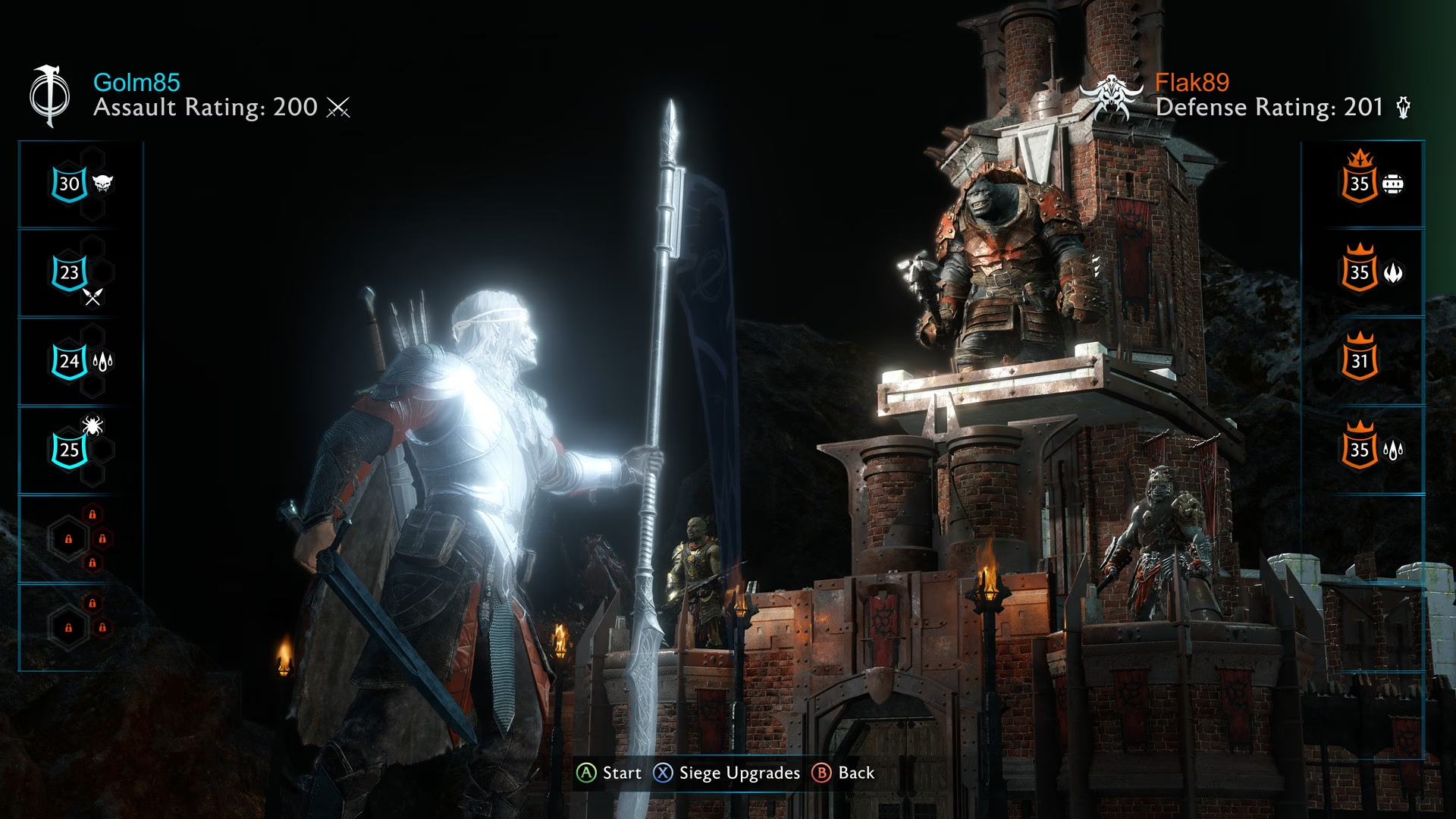
As you progress, you can dominate these captains and turn them into your own loyal followers. You’ll command them to betray their former allies, assassinate rival warlords, or act as your personal bodyguards. You’ll also use this system to lay siege to massive fortresses, commanding your orc army to assault the gates and eventually topple the fortress’s overlord.
The Nemesis System’s addictive nature lies in how it turns every encounter into a strategic puzzle and a personal narrative. It gives you a choice: you can methodically dismantle the enemy’s hierarchy, systematically targeting captains, dominating them to turn them to your side, or killing them to weaken the fortress’s defenses from the ground up. By taking out key captains and their bodyguards, you can reduce the number of enemies you’ll face inside and even turn the Warchiefs against their Overlord, making the final assault a breeze. Or, if you’re feeling confident, you can rise to the challenge and bypass the whole process, taking on the fortress and its Overlord head-on from the very start. Either way, the system creates an endless cycle of betrayal, revenge, and conquest that makes every victory feel uniquely earned.
Even the quest system is a huge win for the game. The side quests are so well-formatted and thoughtfully designed that their storytelling is on par with the main campaign. They don’t feel like an afterthought; in fact, without the proper icons, you’d have a hard time telling which are part of the main story and which are not. Many are also directly integrated into the progression and item systems, giving you excellent incentives to complete them.
This leads to the surprisingly compelling item system. It’s so much more than just finding better loot. Every piece of gear you pick up, your sword, dagger, armor, and even your ring, has its own set of stats and unique perks. What makes it so addictive is that you can “awaken” each item’s true power by completing a specific challenge, like killing a certain type of orc or performing a specific combat move, you can unlock a new perk and upgrade the item to legendary status. This creates a constant loop of discovery and personal challenge, where you’re always excited to find new gear and put in the work to make it truly yours. It’s a system that consistently rewards your investment and makes you feel powerful.
My only minor gripes are the frequent repetition of Orc names and that the Orcs (and your nemesis/followers) can’t really transfer seamlessly between areas/fortresses without jumping bunch of hoops, the different areas feel disjointed as a result. And it isn’t as tight of an experience as the first game because of the bigger scale. Lastly, while the parkour system is generally smooth, it occasionally has a mind of its own, snapping to ledges or jumping to walls you didn’t intend to, in a way that feels similar to the Assassin’s Creed titles.
Aside from these gripes, the game is a triumph. While I played most of the campaign on my Steam Deck, I switched to my desktop PC for the final few hours to crank up the visuals and experience it at its full glory. And to my surprise, the graphics hold up exceptionally well. Shadow of War looks every bit as good as a modern AAA title and could easily pass as one if it were released today.
Despite its rocky launch and a frustrating first attempt, Middle-earth: Shadow of War ultimately redeemed itself completely for me. A chance encounter was all it took for me to realize that its incredible core gameplay, fueled by the highly addictive Nemesis, Follower, and Fortress systems, creates a fantastic experience. Its emergent storytelling, set against the backdrop of the masterpiece that is the Lord of the Rings universe, truly makes it a worthy and triumphant sequel to the first one.