
7.5
Score
When A Two-Hour Chill Building Session Meets an Imbalanced Difficulty Spike
Diplomacy is Not An Option Review
By lyndonguitar
Published on May 15, 2026 review
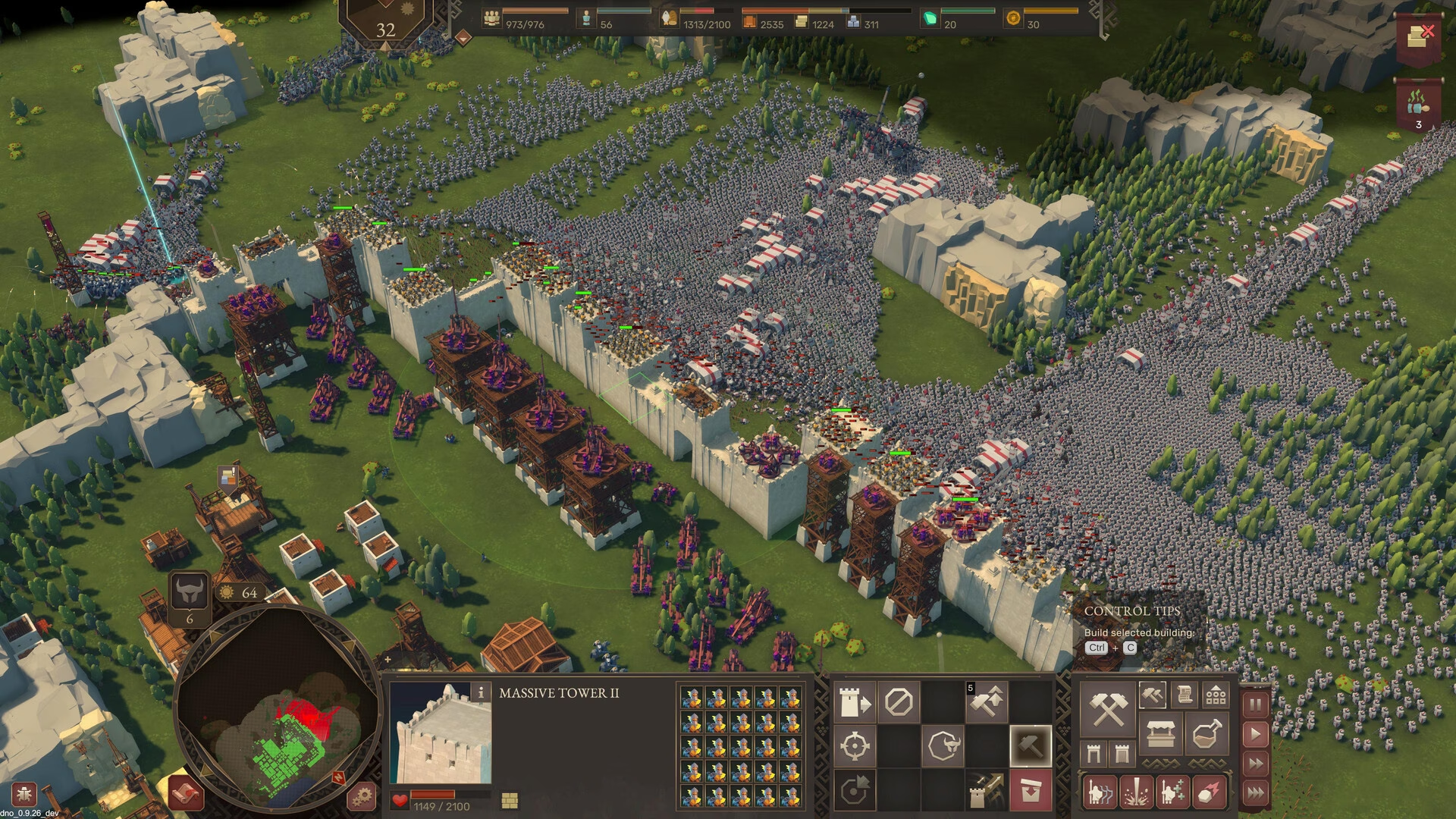
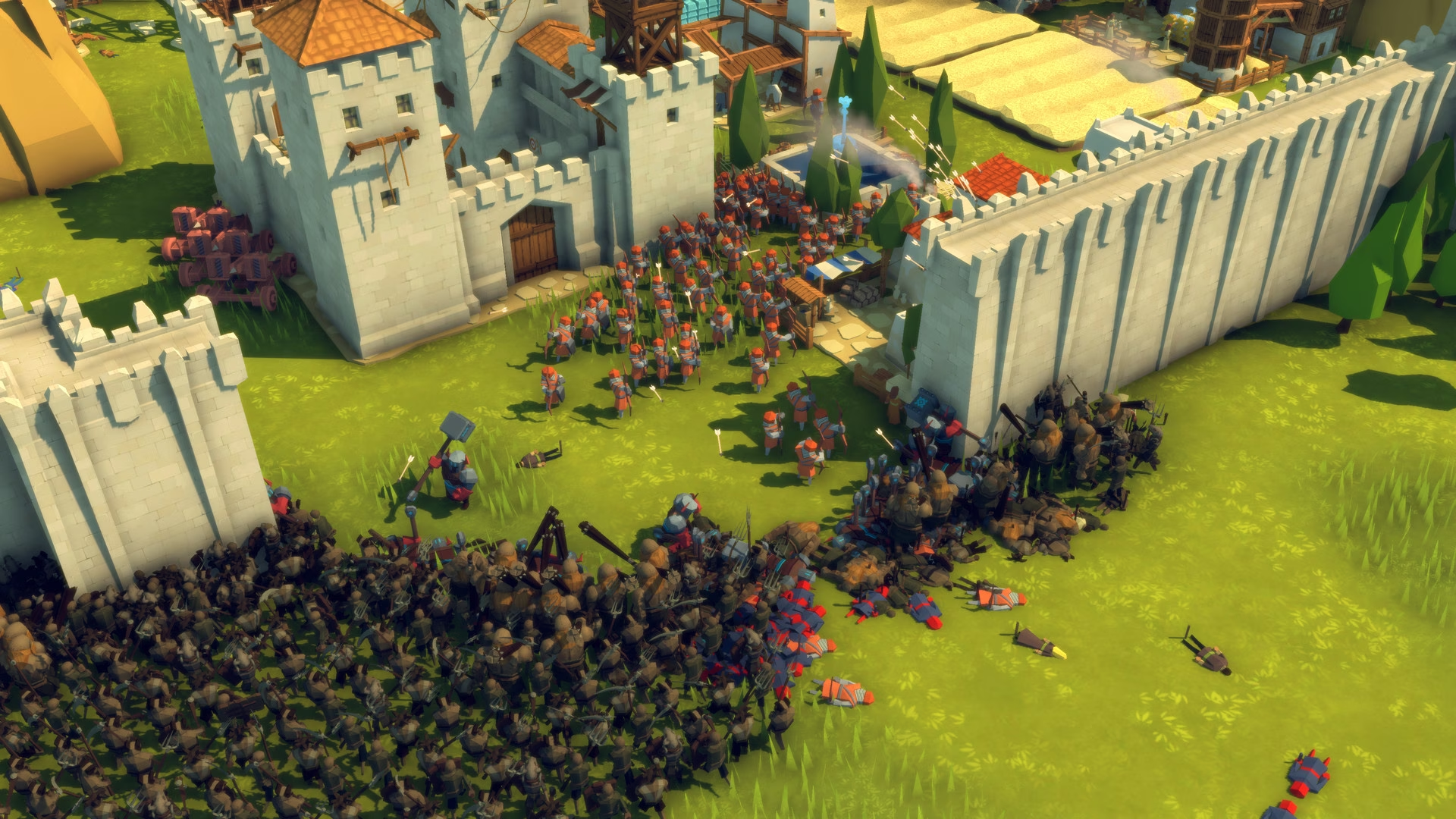
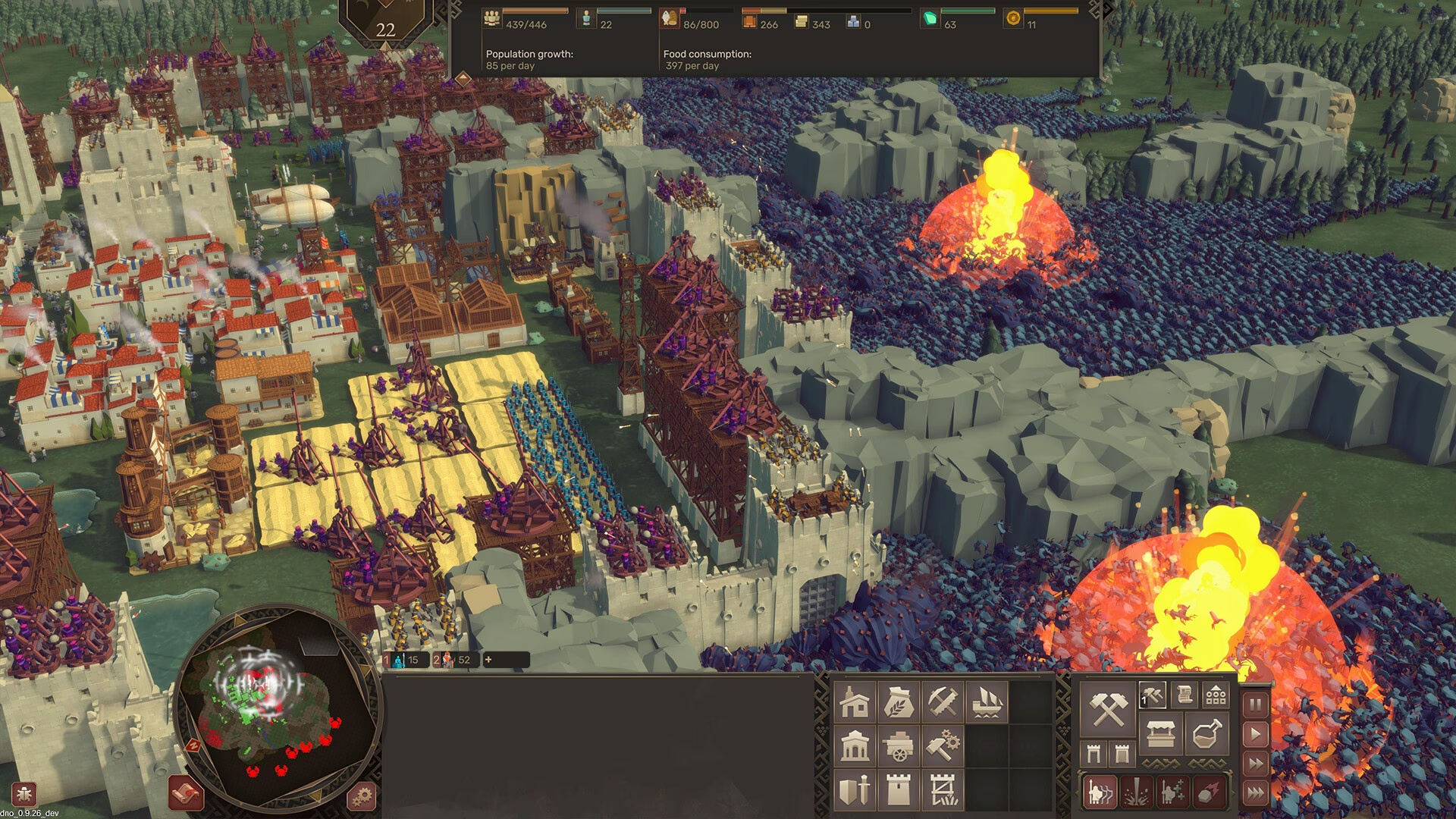
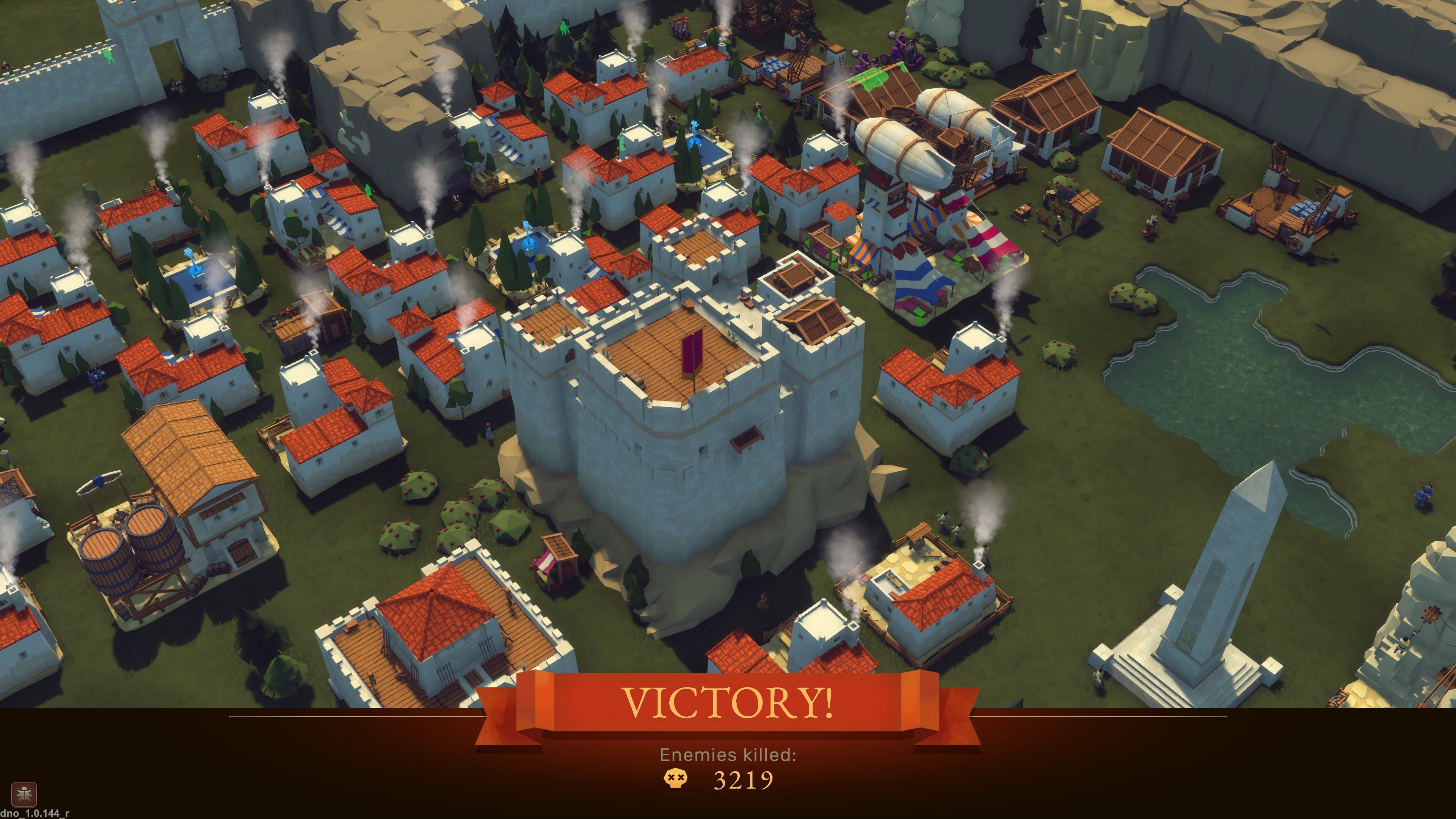
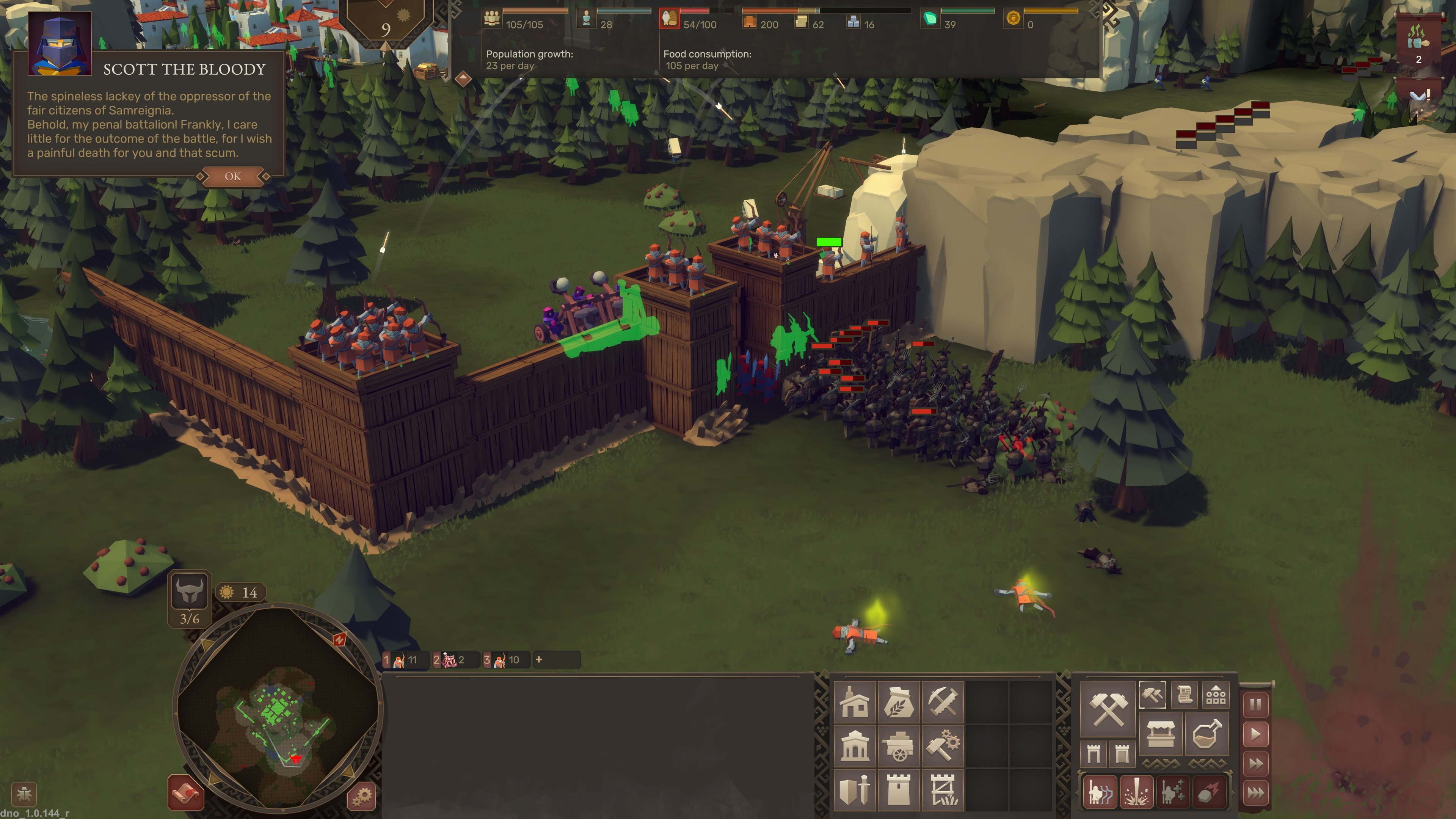
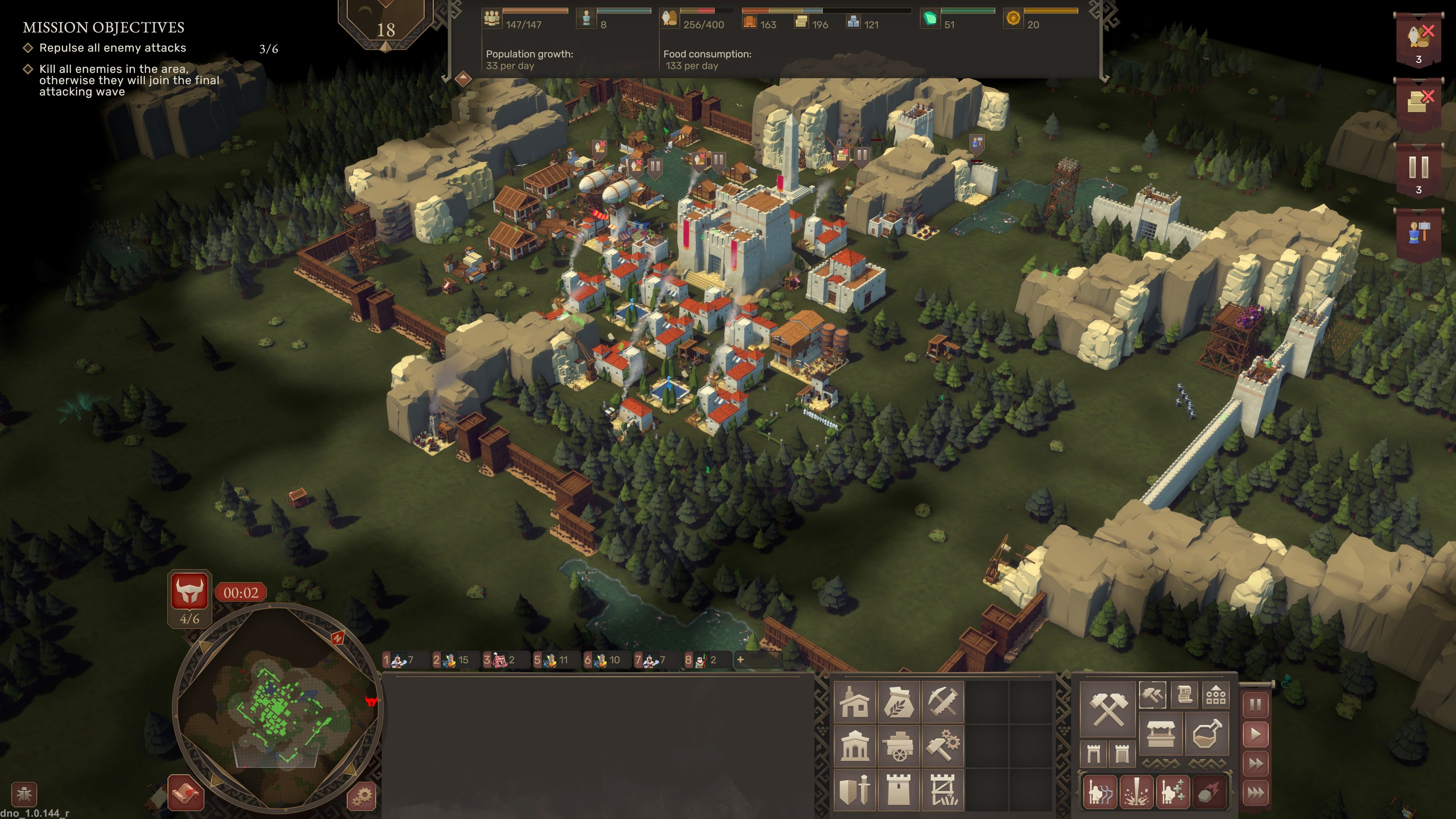
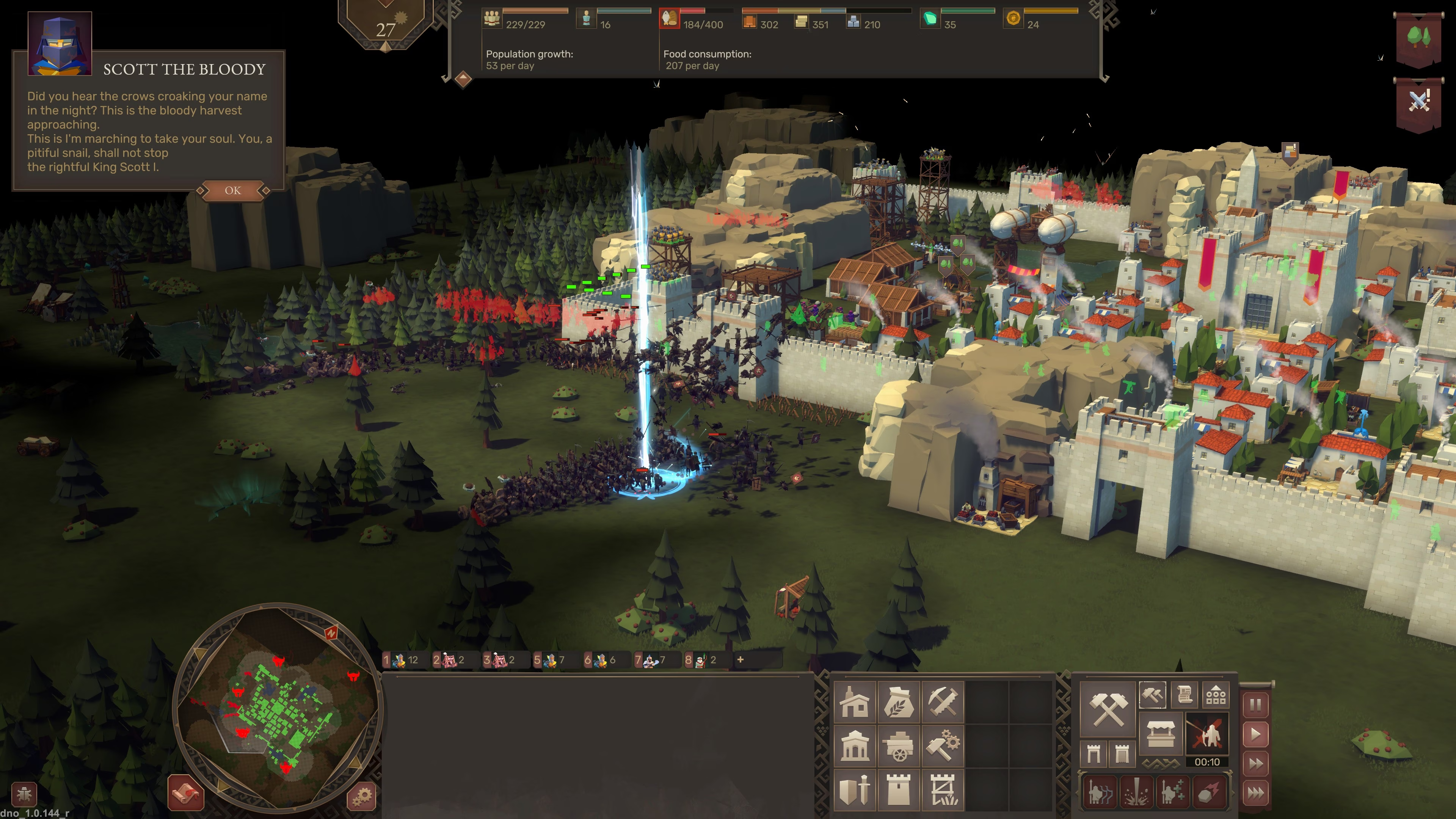
There is a very specific brand of nostalgia that hits when a game takes me back to those long afternoons playing RTS classics, where the strategy wasn’t a series of surgical strikes and high APM moves, but rather turtling up behind layers of stone and iron, defending against enemy attacks, until I had enough firepower to flatten the map in one go. Diplomacy Is Not An Option is a love letter to that turtling part, but it coats it in a layer of frantic, modern low-poly chaos that makes it both a relaxing builder and a total heart-attack and frustration simulator.
It’s a game that understands the primal joy of the “turtle.” You spend your time meticulously building your base, hoarding resources, placing walls, clicking towers and placing defensive units into place, and preparing for the inevitable. But while the foundation is built on solid memories, the sheer weight of the difficulty spikes and some clunky mechanical friction keep this kingdom from being a perfect game for the genre.
If you grew up playing tower defense mods or RTS campaigns just to see how effectively your walls could hold enemy attacks, Diplomacy is Not an Option is your playground, a Medieval Fantasy RTS that is a mix of tower defense, horde survival, RTS, and base building genres. It is heavily reminiscent of They Are Billions but with a more tactile, brick-by-brick focus, and with significantly less Undead.
For me, It successfully translates that childhood “turtling” energy into a modern survival game. What’s most refreshing is the removal of the peon / peasant / builder headache. You aren’t babysitting individual builders or resource gatherers anymore. You deploy buildings, you command the military, and you watch the machine work.
This streamlined approach allows you to focus on the functional beauty of your defensive layout. There is a “cozy” quality to the early game—expanding your borders, securing stone, and feeling like a master of your domain. But that coziness is a trap. The game lives in a space that is simultaneously chill and frantic, and it loves to remind you that your peace is temporary, and that Diplomacy is Not An Option.
The core loop of Diplomacy is Not An Option involves expanding your reach during the day to grab wood, stone, and iron, then retreating behind your ramparts to face occassional waves that start in the hundreds and end in the tens of thousands.
The game offers a solid variety of ways to play. The Story Campaign is the main mode, featuring a dark, tongue-in-cheek humor where you serve a bankrupted, ego-driven King. It has branching paths that actually let you choose between loyalty and rebellion, which is a nice added touch and something I didn’t expect. The dialogue heavy basic cutscenes in-between missions do get old after quite sometime though and I just wanted to skip all of these after a while.
If you just want the pure “turtle” experience, Endless Mode lets you build until the waves (which can reach 25,000+ units) finally crush you. Challenge Mode offers tactical puzzles with limited resources, and Sandbox Mode is the ultimate playground for testing wall designs with zero pressure of a game-over screen.
Despite the “stripped-down” nature of the Peon units, micromanagement hasn’t disappeared—it’s just moved into the menus and the combat with large number of units. The way resource chains and building prerequisites are handled feels unnecessarily heavy. You’ll find yourself constantly diving back into the UI to check what’s missing or what needs to be upgraded. This is exacerbated by a UI that is frankly confusing at first. The monochromatic icons in the menus make everything look identical. While the building icons inside the city have color, the interface itself takes way too long to get used to. It’s a hurdle that shouldn’t be there.
When the fighting starts, the limitations become even clearer. The combat is barebones. You’re mostly dealing with “dumb” units that you point and click toward the enemy. There isn’t much tactical depth or command options to the individual soldiers, and the enemy AI is easily exploited. You can kite massive groups of enemies around your walls or abuse aggro loops because they aren’t smart—they’re just numerous. The challenge isn’t outsmarting the horde; it’s surviving the sheer volume of bodies the game throws at you.
The payoff for all that micromanagement clicking is the spectacle. Watching a sea of enemies hit your fortifications and literally shatter into pieces under the weight of your upgrades is peak RTS dopamine. Seeing the horde get tossed around like ragdolls by your heavy hitters is exactly the kind of visual feedback that makes the hours of resource-grinding kind of worth it.
The core tension of the game comes from the timer. As that clock ticks toward zero, the “vibe” shifts from a relaxing builder to a high-pressure survival horror. You feel the desperate need to get your defenses ready, but the game is notoriously bad at telling you what’s coming.
Sometimes you’ll overprepare and feel underwhelmed by a weak wave. Other times, Diplomacy is Not an Option will throw a wave so massive, spread out, and overpowered that it feels completely imbalanced. These “out of the blue” difficulty spikes are the biggest detriment to the experience. It feels less like a fair test of your skill and more like the game pulling the rug out from under you after you’ve spent hours carefully constructing your base.
You spend two hours having fun creating a great looking base layout, only to have the game pull the rug out due to a sudden difficulty spike for the last end wave that doesn’t represent the rest of the previous waves. An imbalanced difficulty spike vaporizes your masterpiece in seconds. It feels less like a tactical defeat and more like a “cheap shot” from the game that doesn’t respect your time.
At first glance, you’re looking at a charming, low-poly world that feels like it was plucked from a stylized toy box. The characters and buildings have that clean, geometric simplicity—sharp edges, flat colors, and a distinct lack of “grit.” It’s a look that suggests a lighthearted, almost “cozy” experience, but presumably an equally light performance requirements.
But we have to talk about the “Performance Floor and Ceiling”. On my desktop PC, Diplomacy is Not an Option is silky smooth, handling thousands of units without a hitch. But on the lower powered machine like the Steam Deck, it’s a different story. Despite the “basic” low-poly art style, the Steam Deck struggles significantly as the unit count rises. It’s disappointing because the “chill” building phases feel like they’d be perfect for handheld play, but the performance floor is just too high for the current optimization.
The maps and additional modes do offer some variety—forcing you to adapt your walls to weird terrain—but the underlying issues remain. Whether you’re in the campaign or a sandbox mode, you’re always at the mercy of that sudden, overwhelming quantity of enemies.
Diplomacy Is Not An Option is a high-energy, stone-stacking low-poly game that captures the “Turtle” animal spirit of the RTS genre. It’s a joy to build a functional, sprawling fortress and watch your archers rain hell from the ramparts. However, the clunky UI, shallow unit control, and “unfair” difficulty spikes keep it from being a masterpiece for the genre.
It’s a game for those who love the hardcore-ism of classic RTS mixed with tower defense and survival horde of the modern age, but you have to be willing to forgive its technical quirks, its desire to see you surprised and fail, and if you are okay with some micromanagement.