
7.5
Score
A Bar Raising 33-Player Coop Experience I Have Never Seen Before
33 Immortals Review
By lyndonguitar
Published on June 24, 2026 review
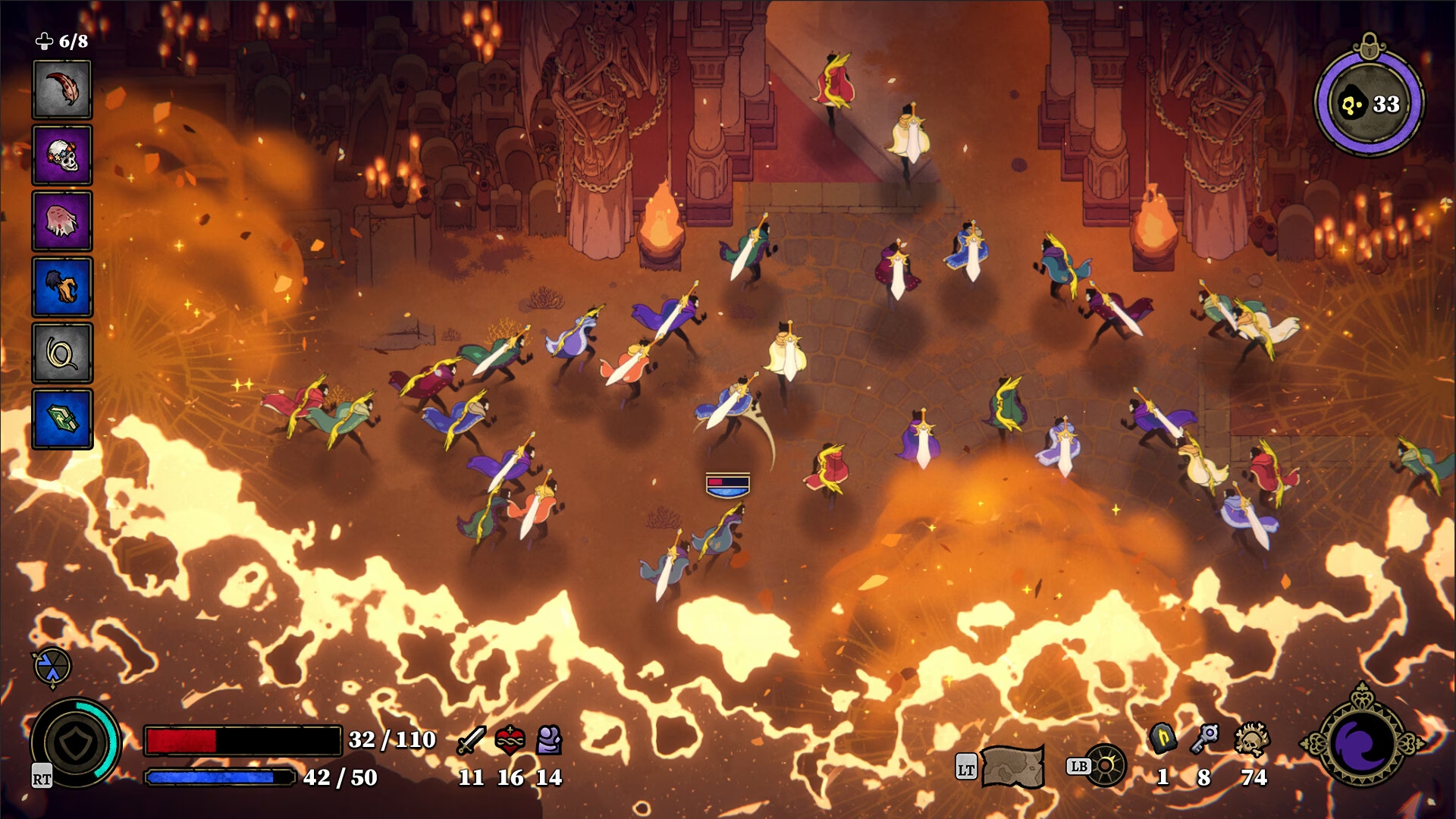
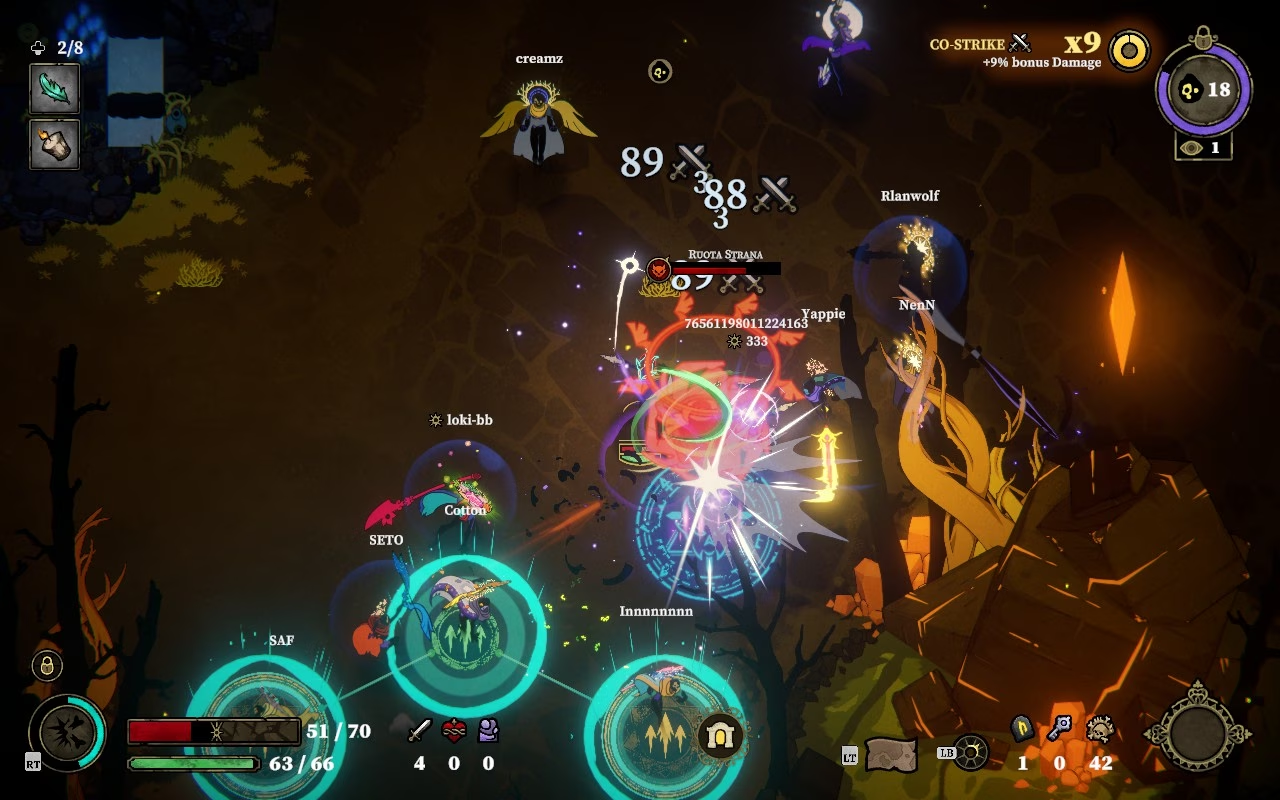
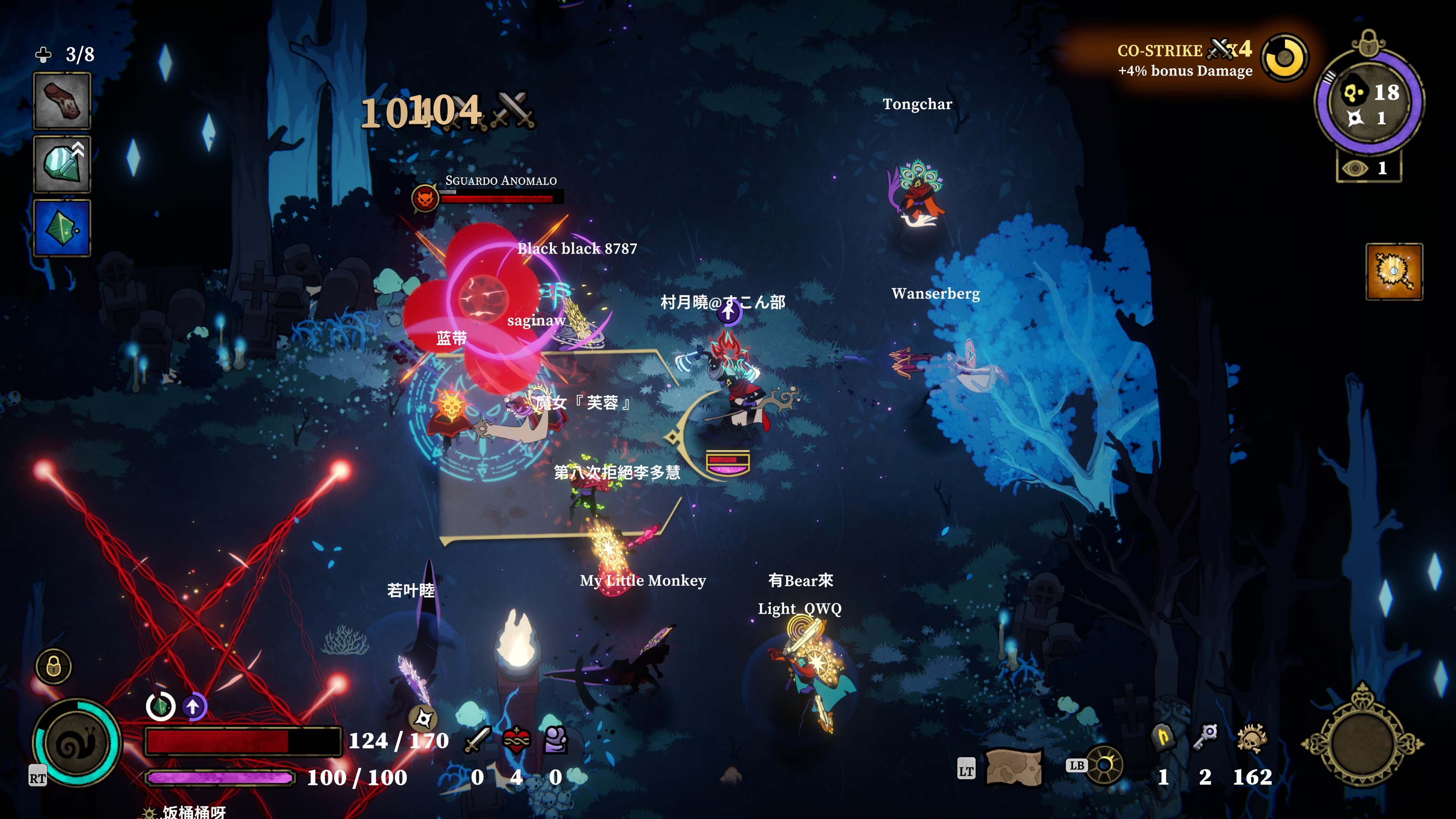
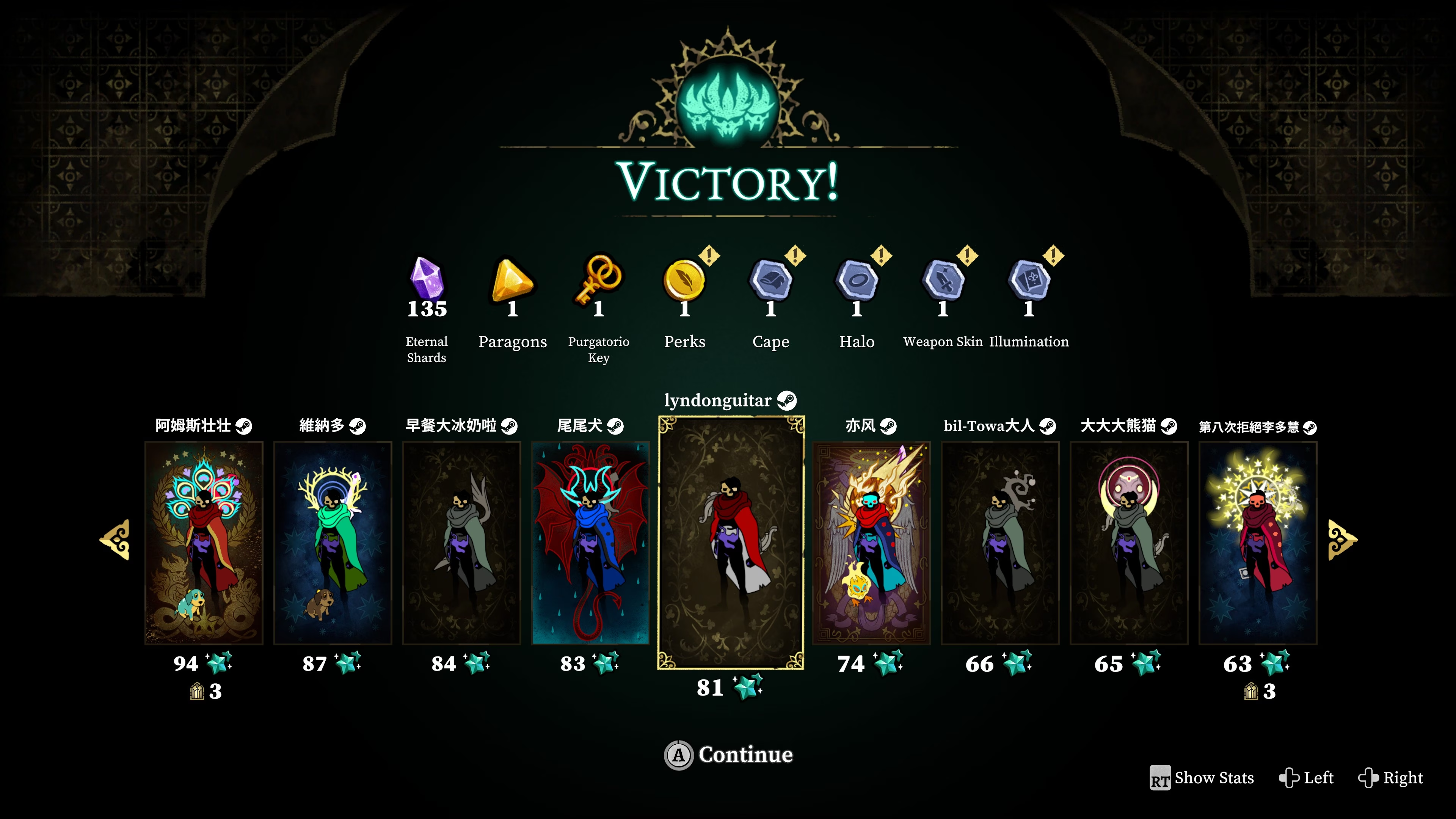
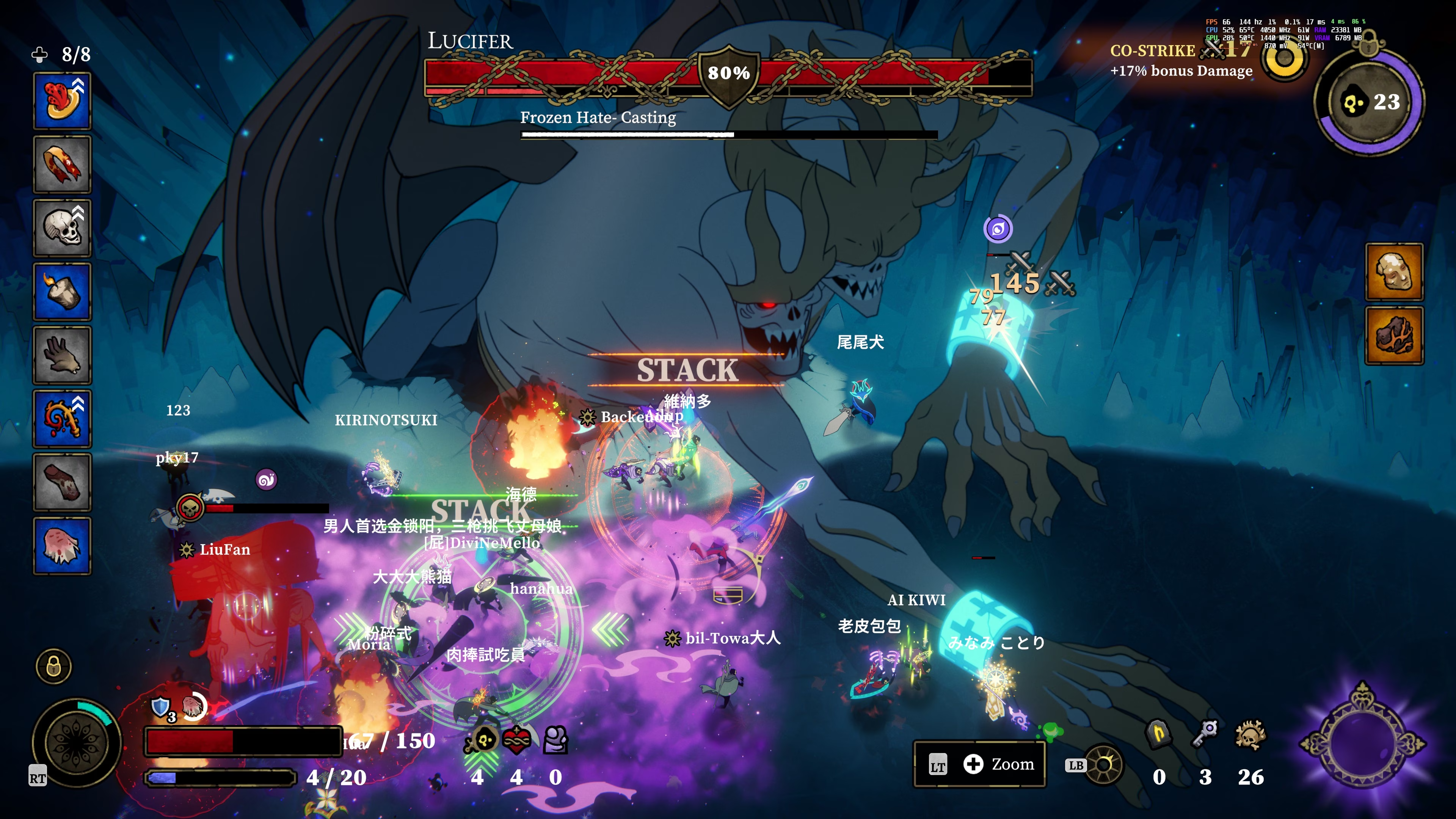
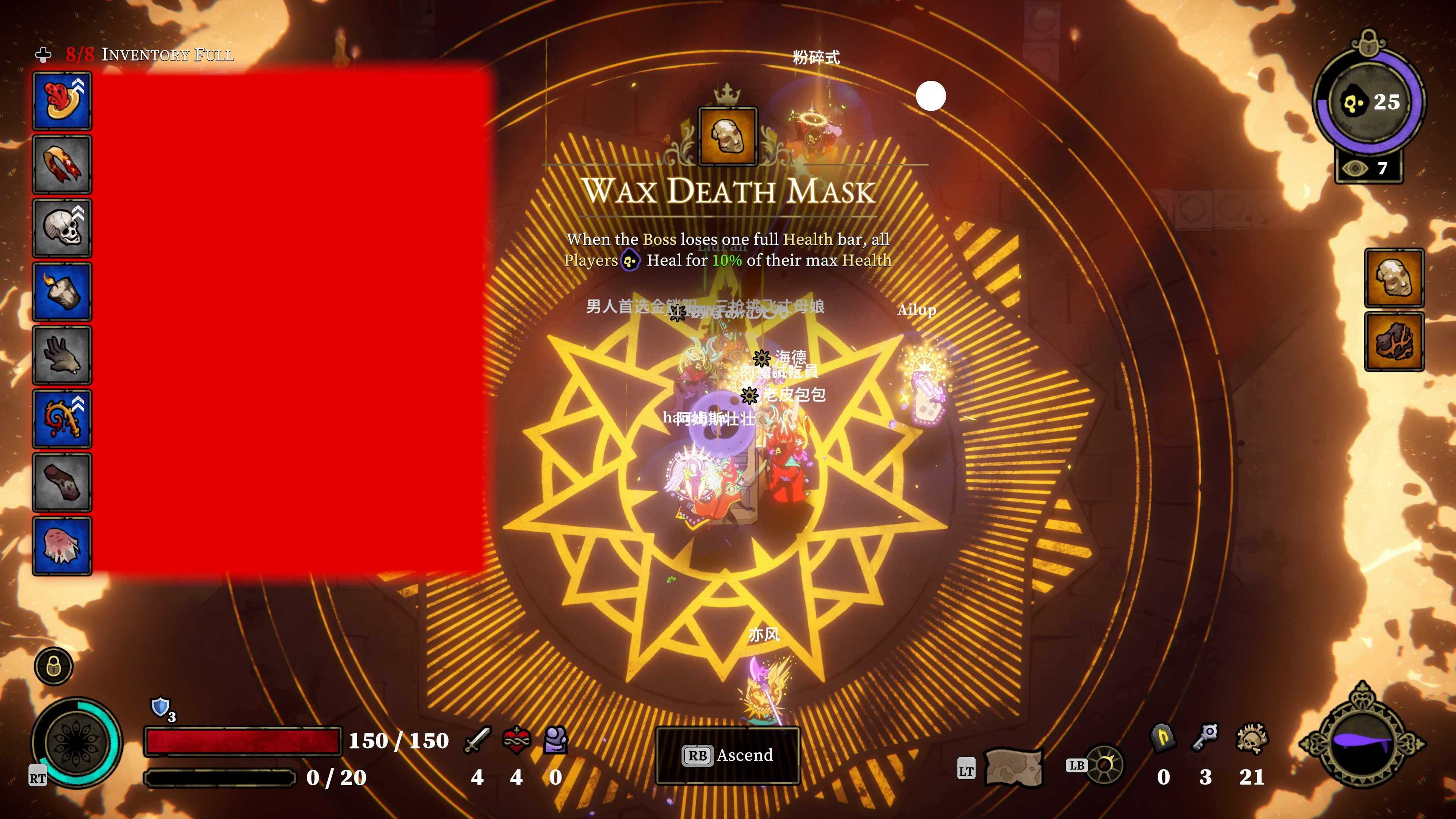
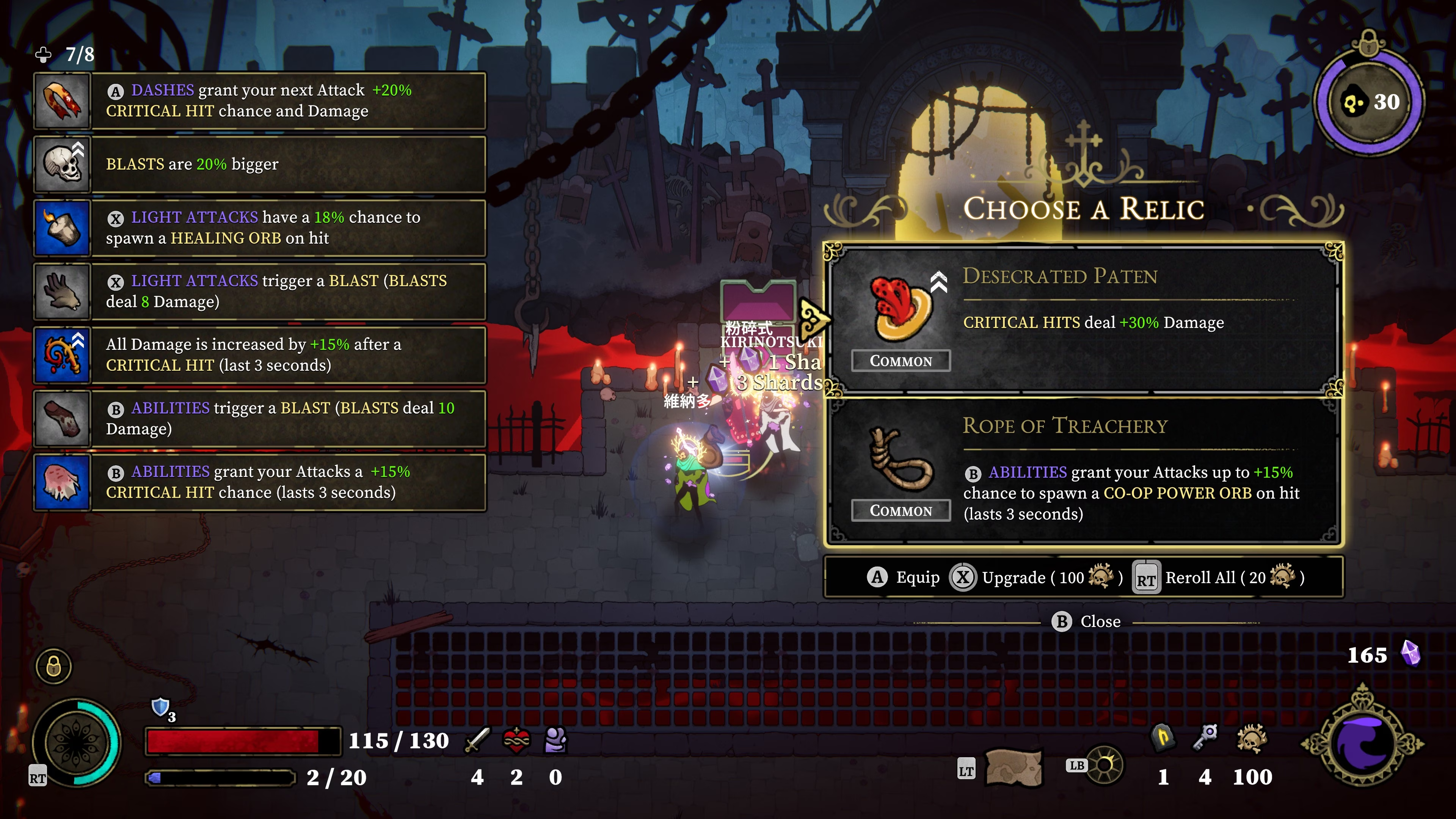
Getting 33 people to agree on anything on the internet usually ends in a chaotic match. Getting them to silently coordinate a massive raid against the wrath of God? That sounds like a bad game plan. Yet, with its launch, 33 Immortals somehow pulls it off. It takes the sweaty, time-consuming commitment of a Battle-Royale match or even an MMORPG raid, completely strips out the toxic voice chat, sweaty gaming, and guild requirements, and injects that massive scale straight into a top-down action roguelite. It is a weird, clunky, and beautifully chaotic experiment that trades traditional singleplayer rogue-lite mechanics for pure, unfiltered cooperative joy.
🤝 Frictionless multiplayer mechanics effortlessly herd a max of 33 randoms into a cohesive team
⚔️ Scratches that Diablo 3 Adventure Mode itch on a massive, shared scale
🏹 Distinct weapon classes demand real learning curves rather than mindless button-mashing and typical archetypes
💀 High baseline difficulty practically forces camaraderie and organic cooperation
🧍♂️ Combat feels undeniably stiff and anchors you in place during attack animations
🌀 Blinding visual clutter makes dodging crucial enemy telegraphs a total guessing game
📉 The shrinking player count leaves later maps feeling awkwardly hollow and lonely
The setup is simple: you and 32 other players drop into a sprawling map with one goal—survive, gear up, and take down a massive boss. It structurally borrows a lot from the Battle Royale genre, but flips the script entirely by making it fully cooperative. You aren’t hunting each other; you’re just trying to keep the group alive. The pacing feels less like a traditional roguelite and much closer to Diablo 3’s Adventure Mode, where you rove across the map completing minor feats, knocking out regional objectives, and hoovering up upgrades before the big showdown.
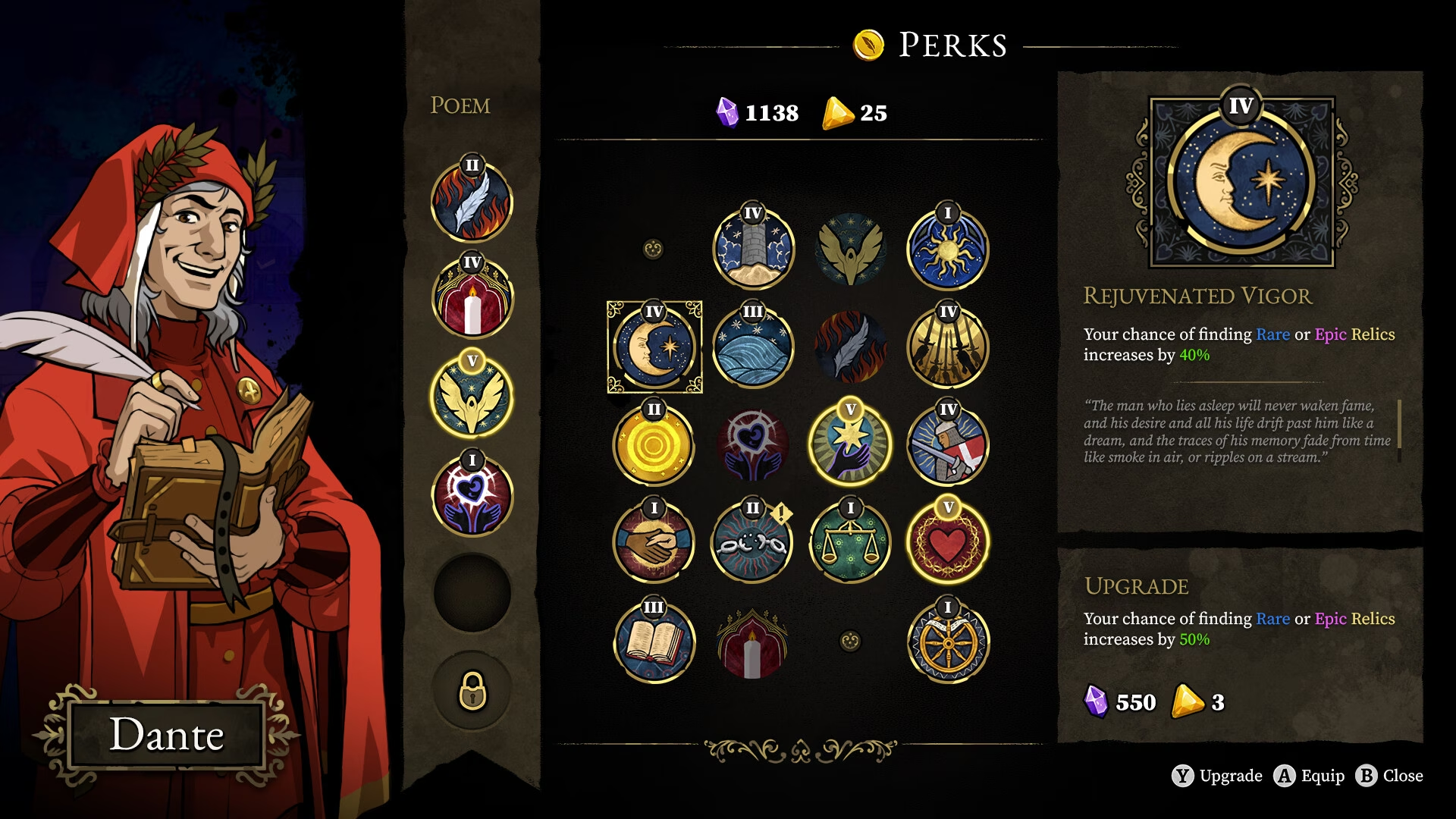
To be more specific, you start in a hub world along with other people in a ‘MMO town’ fashion to select your weapon archetype—each dictating your playstyle, whether you prefer tanking with a heavy sword or hanging back with a ranged bow—before dropping into a large, hostile overworld alongside 32 complete strangers, although some of them can be your friends because you can party up to 4.
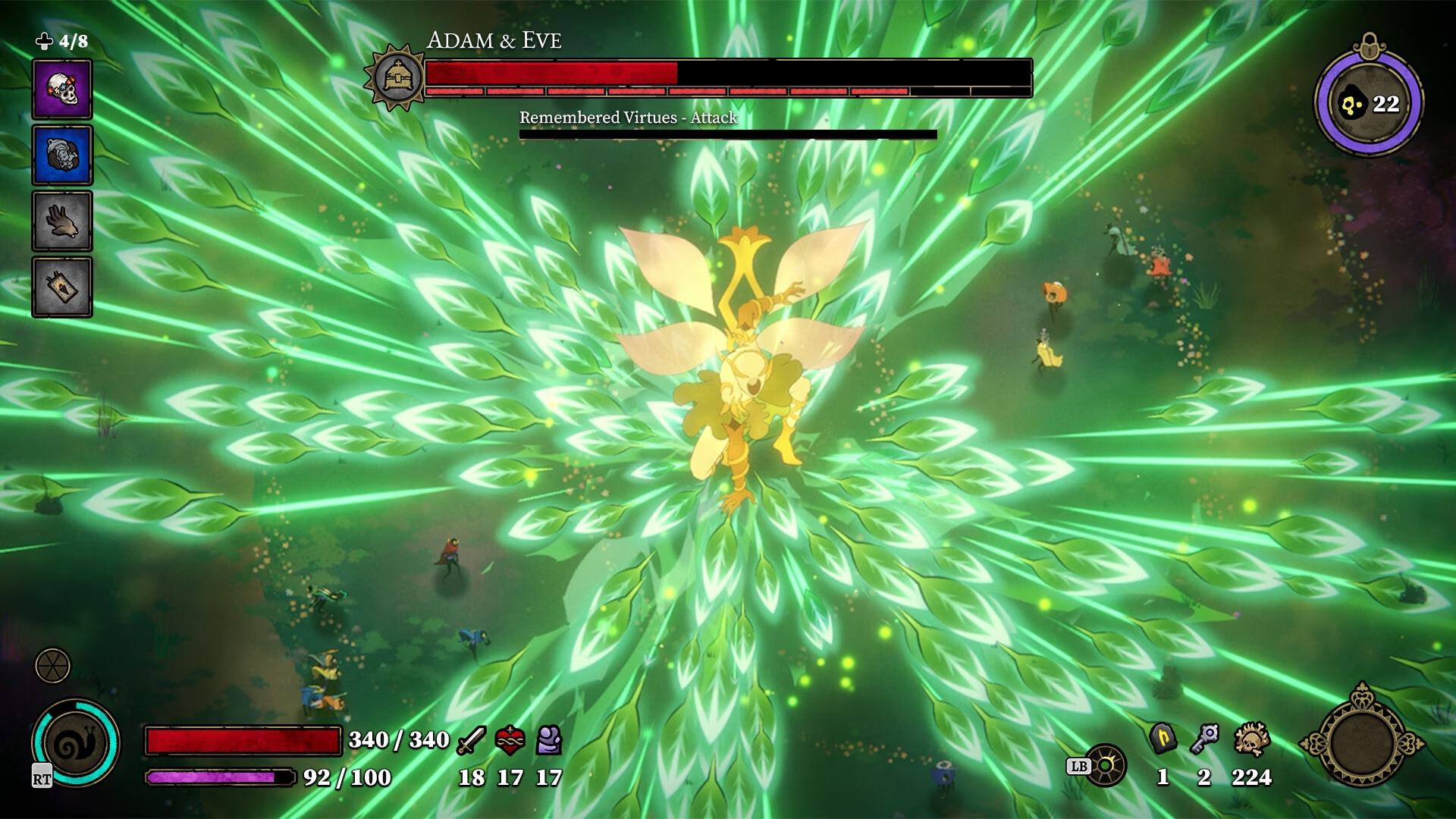
From there, your massive army naturally splinters off into smaller groups to tackle localized mini-dungeons called “Torture Chambers” and complete regional objectives, hoarding relics and buffs to power up your character. Once the timer ticks down, the “Wrath of God” physically engulfs the outer map, funneling every single surviving player into one final, chaotic boss fight that demands tight coordination, perfectly timed revives, and heavy use of cooperative combo attacks to secure the win.
If you look at a screenshot, the immediate instinct is to compare this to Hades. You need to kill that expectation right now. The animations and the feel here are much simpler, favoring a cartoonish aesthetic that legitimately feels like a highly polished, late-2000s Flash game. And I’m saying that as a compliment. It has a vibe that feels almost closer to a modern mobile game in its straightforward presentation, but underneath that shell is a full-fledged PC game loop.
That simplicity bleeds directly into the combat, which is going to be the biggest hurdle for new players. The mechanical execution is undeniably stiff. Every weapon type feels totally different, but they all share a distinct lack of fluidity. Take the tank-style melee builds, for instance. When you initiate an attack, your character locks entirely into a stationary position for a long time. You can’t move, the range is frustratingly short, and the recovery frames feel heavy.
Initially, this stiffness feels like a dealbreaker. But as you spend more time with the game, the rhythm starts to click. You realize you have to rely heavily on your dodge roll to break up the stiffness and reposition. You aren’t fluidly dancing between enemies; you are committing to a strike, absorbing the friction, and dodging out. It definitely takes time to get used to, and it easily remains the weakest point of the game, but the distinct learning curve attached to every single weapon archetype eventually turns that clunkiness into something manageable, and kind of adds depth.
Where 33 Immortals ultimately shines and is something that i would consider a bar raising mechanic is in its cooperative infrastructure. Getting dozens of strangers to work together online is usually like herding cats that don’t follow and want to do their own thing, but the mechanics here naturally encourage people to cooperate effortlessly.
Because the baseline difficulty is so punishing, wandering off on your own is a death sentence. The game actively rewards you for sticking to the pack. When a cooperative skill requires players to stand on specific ground glyphs to activate a buff, you will literally see people drop what they are doing and race over to stand on them. When you go down, teammates will sprint through a horde of enemies just to revive you. It captures the highs of a massive guild raid, but it implements them in a completely hassle-free way. You don’t need a headset, friends, and you don’t need to commit hours of your evening. You just queue up, fall in line, and enjoy the shared chaos.
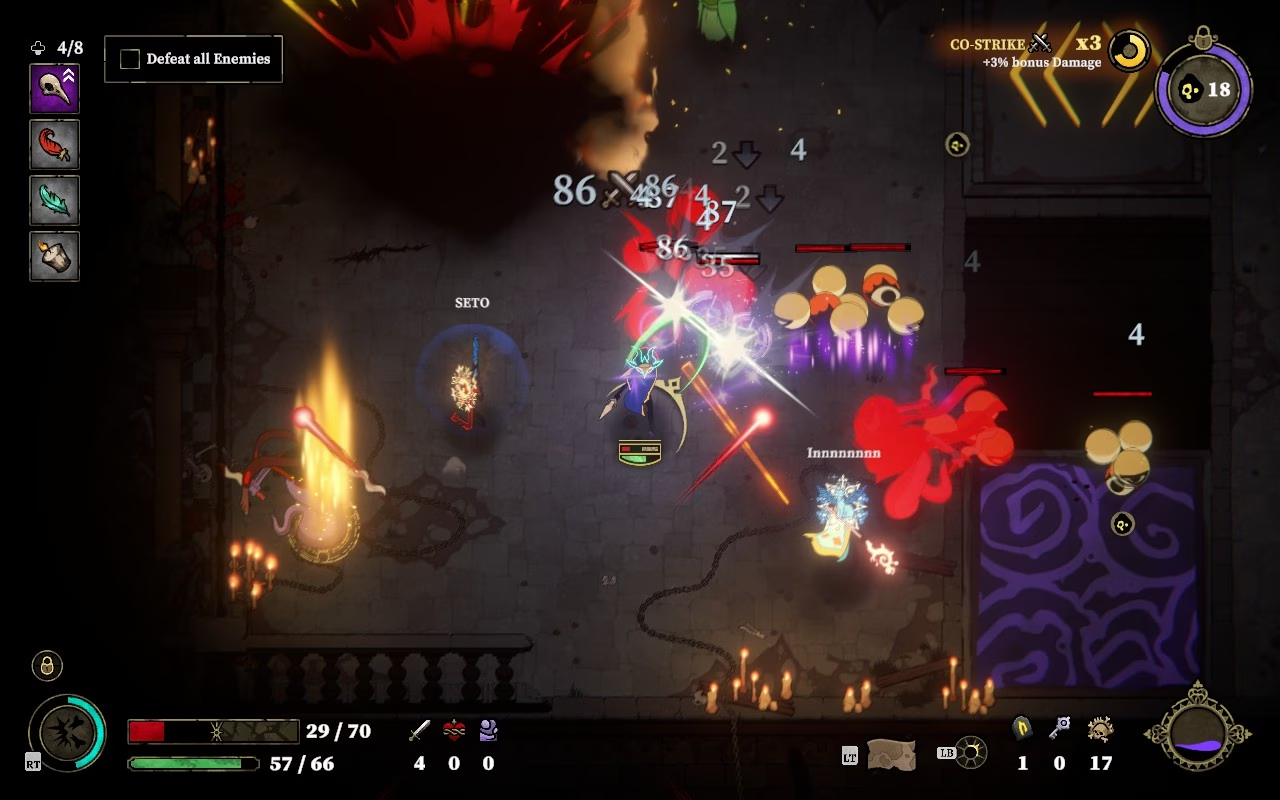
However, throwing 33 players, their attacks, their pets, and swarms of enemies onto the screen simultaneously comes with a massive cost. The visual clutter frequently devolves into unreadable chaos.
When everyone converges on a single elite mob or a boss, the screen just explodes with overlapping visual effects and damage numbers. The problem is that enemy attack telegraphs get completely buried under the noise. You end up taking massive damage simply because you couldn’t physically see the red danger zone or enemy pre-attack animation hiding under twenty other player animations. The developers are clearly trying to manage this—you’ll notice player pets dynamically despawning and spawning to save screen space—but it’s still a visual mess.
That chaos also gives way to a bizarre pacing issue as a run goes on. The game scales down its player count across its three maps—you start with 33 in the first zone, narrow down to 22 in the second, and end with 11. While it mimics a Battle Royale ring closure, it ironically leaves the mid-to-late game feeling awkwardly lonely. The maps are large, and when your massive army gets whittled down, those later stages lose the frenetic, crowded energy that makes the opening moments so much fun. Add in the occasional network lag and performance hiccups, and the late-game momentum can seriously drag. And yes, the performance isn’t that particularly good given the visuals that it has. There are fps drops during crowded moments, and with the Steam Deck, i can barely reach 50-60 fps and had to use Lossless scaling to make it feel better.
Finally, we have to talk about the portable experience. Because the game is a live, multiplayer session from end to end, there is absolutely no pause button. This is highly unusual for a roguelite, a genre practically built on the idea of suspending a run whenever you want. If you are playing on a Steam Deck, you cannot just hit the sleep button when real life interrupts. If you put the console to sleep, you disconnect and lose the run. It completely kills the pick-up-and-play convenience, and it is a reality of the always-online structure that takes a long time to get used to. Although in this case it is completely understandable and the amazing multiplayer mechanics somewhat makes up for it. Although this is something that I had to get used to because I keep thinking this is pausable all the time.
Currently as of this launche, the game suffers from a noticeable lack of environmental variety. The three core maps feelvery structurally similar, and the repetitive nature of the grind does set in eventually. But considering the genuinely innovative multiplayer framework holding it all together, it is a flaw that is easy to look past.
33 Immortals takes the intimidating, time-consuming nature of MMORPG raiding and boils it down into a fast, cooperative roguelite that respects your time. If you can push past the initial friction of the stiff combat animations and train your eyes to cut through the intense visual clutter, there is an incredibly addictive gameplay loop hiding here. It is rough around the edges, but dropping into a map with 32 other players and silently agreeing to take on the world together is a vibe that few other games are even attempting to capture